10,200+ Plugin Vulnerabilities: The Risk Behind “One More Plugin”

In 2025, newly cataloged WordPress plugin vulnerabilities reached 10,228, accounting for about 91% of all WordPress-related vulnerabilities tracked that year.
That number matters because plugins are where WordPress becomes useful. They are also where WordPress becomes unpredictable. Every added plugin expands the attack surface, adds update dependencies, and increases the odds that a routine change introduces a new weakness. When the vulnerability backlog is this large, the question is not “Will something be disclosed?” It is “Will you know which disclosure applies to your sites, and will you act before it is exploited?”
The uncomfortable truth is that most organizations are not failing at security because they ignore patches. They fail because they lack signal. Teams drown in alerts, miss the one plugin that matters, or discover too late that a “minor” update was actually a security fix. Patchstack’s 2025 statistics also show thousands of items sitting in an unpatched state, which is exactly the window attackers look for.
A practical response is less about panic and more about process:
- Inventory what is actually running. Not what is “approved,” but what is installed, active, and reachable.
- Prioritize by exposure. Public-facing forms, file upload features, membership and commerce plugins, and anything that handles authentication should have faster SLAs.
- Reduce plugin sprawl. Retire unused plugins, consolidate overlapping functionality, and standardize “known-good” alternatives.
- Create an updated rhythm with verification. Updates without testing can create downtime; testing without speed creates risk. You need both.
If you want fewer surprises and faster decisions, start with consistent monitoring plus disciplined maintenance. Our WordPress Vulnerability Watch flags relevant issues quickly, and our WordPress Maintenance keeps updates, testing, and rollbacks from becoming a fire drill.
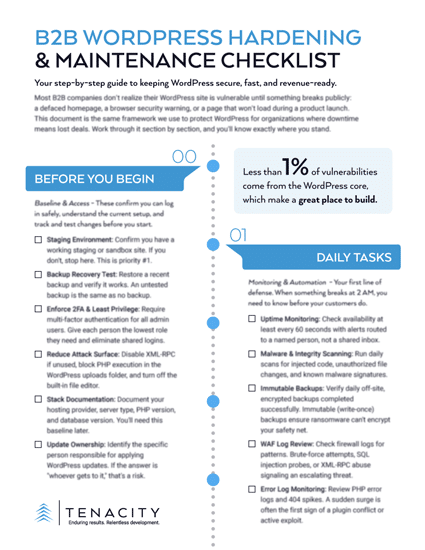
DOWNLOAD THE B2B WORDPRESS SECURITY CHECKLIST