The 7,966-Vulnerability Wake-Up Call for WordPress in 2024

In 2024, 7,966 new security vulnerabilities were disclosed across the WordPress ecosystem, with a large share tied to plugins.
For risk assessments, the number is less important than what it implies: WordPress security is a supply-chain problem. Every plugin and theme is another vendor, another update cadence, and another potential weak point. When disclosures come at this volume, “we update regularly” isn’t a control you can defend in an audit. The control is how quickly you identify what’s relevant to your stack and how much time you spend exposed.
That time is your exposure window, the gap between when a vulnerability becomes known and when your site is protected. Exposure grows when updates get stuck behind testing, when teams add plugins without review, when a maintainer stops shipping fixes, or when a provider relies on a generic weekly update cycle instead of severity-based triage. Attackers don’t need new techniques if they can rely on common sites running outdated versions.
This isn’t just an IT problem. Marketing leaders often own the web roadmap and toolset: forms, SEO plugins, analytics, A/B testing, event registration, and integrations. Those tools can quietly expand the attack surface. Asking a maintenance partner for clear answers: what’s installed, what’s vulnerable right now, how critical issues are prioritized, and what happens when no patch exists, prevents security from becoming guesswork.
A practical program looks like this:
- Keep an always-current inventory of plugins/themes (including inactive ones)
- Map disclosures to exact versions in use (not generic alerts)
- Define patch SLAs by severity and exploit activity
- Apply compensating controls when fixes aren’t available (WAF rules, temporary disablement, access restrictions)
- Audit governance: who can install plugins, how exceptions are approved, and how releases are validated
If you want to formalize this into something you can show during audits and renewals, we help teams set up continuous monitoring and run a WordPress security audit that turns vulnerability volume into prioritized, trackable work, so your maintenance process keeps pace with 2025’s reality.
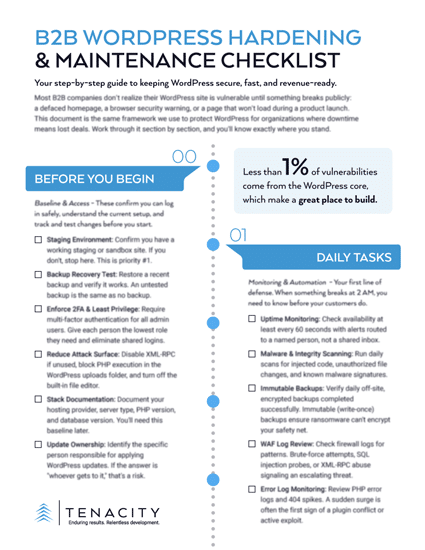
DOWNLOAD THE B2B WORDPRESS SECURITY CHECKLIST