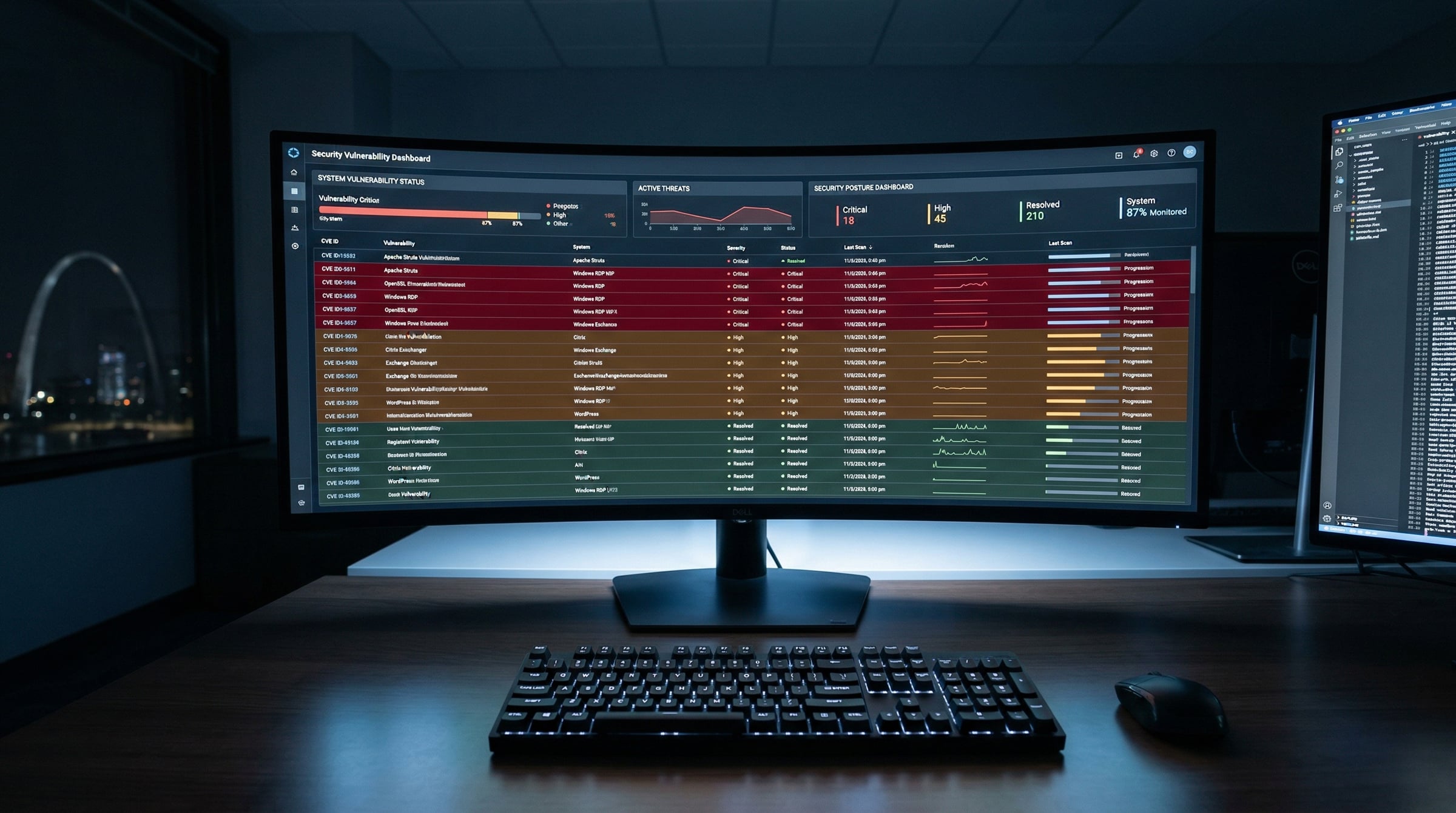
WordPress Vulnerability Watch
VULNERABILITIES DROP EVERY WEEK. ARE YOU PAYING ATTENTION?
Ongoing vulnerability monitoring for core, themes, and plugins with risk-based prioritization and clear remediation guidance. Visibility into your security risk, whether you self-execute updates or not.
- Vulnerability Monitoring
- Risk Prioritization
- Remediation Guidance
- Patch Scheduling
Ready for vulnerability monitoring?
Tell us about your setup and we’ll recommend the right tier.
WordPress Vulnerability Monitoring Plans
Choose the level of coverage that matches how your team handles updates. Every plan includes continuous monitoring.
Need vulnerability monitoring across multiple sites or environments? Let’s talk

11,229 Disclosures and Counting
Why Manual Vulnerability Tracking Fails
Patchstack cataloged 11,229 WordPress vulnerabilities in 2025. Wordfence added 2,213 more in Q4 alone. That volume makes manual tracking impossible for any team that also has a business to run. And the pace is accelerating, not slowing down.
We monitor every plugin, theme, and core component in your stack against multiple vulnerability databases in real time. When something affects your site, you hear about it within hours, not weeks.
- Continuous monitoring against Patchstack, Wordfence, and NVD databases
- Alerts scoped to your specific installed plugins and themes, not generic feeds
- 190 new disclosures tracked in a single week of February 2026 alone
- 91% of 2025 vulnerabilities originated from plugins, where your biggest exposure lives
Your CVSS Scores Are Lying to You
Risk-Based Patch Prioritization That Reflects Reality
Only 22% of WordPress vulnerabilities in early 2025 scored High or Critical on the standard CVSS scale. But Patchstack’s real-world exploitability analysis flagged 41.5% as practically dangerous. That is a 1.89× gap between what standard scoring tells you and what attackers can actually exploit. Teams relying on CVSS alone are triaging with incomplete data.
Our monitoring goes beyond severity labels. We evaluate each disclosure against your specific environment, access model, and plugin configuration to tell you what actually matters for your site, not what matters in theory.
- Priority scoring based on real-world exploitability, not just CVSS ratings
- 57% of H1 2025 vulnerabilities were exploitable by unauthenticated visitors
- Context-aware risk assessment matched to your installed stack
- Clear “fix now vs. monitor vs. mitigate” recommendations per disclosure


Half of Disclosed Vulnerabilities Have No Patch
Actionable Remediation Guidance for Every Disclosure
In 2025, 46% of published WordPress vulnerabilities had no patch available at the time of disclosure. Even among those who did, only 50.5% had a fix ready on the day it was announced. Knowing you are exposed is only useful if you also know what to do about it, especially when “just update” is not an option.
Every alert we send includes specific remediation steps. When a patch is available, we tell you exactly which version to target and flag any known conflicts. When no patch exists, we recommend mitigations: WAF rules, feature disabling, or temporary plugin swaps. The goal is never to leave you staring at an alert with no next step. Breach cleanup starts at $3,000. Proactive monitoring costs a fraction of that.
- Specific remediation steps for every disclosure, patched or unpatched
- Conflict flagging before you update, so patches do not break functionality
- Mitigation recommendations for zero-day and unpatched vulnerabilities
- 39.1% of compromised sites were running outdated core software at time of infection
How Monitoring Works
From onboarding to ongoing coverage in days. We map your stack, connect the feeds, and start watching.
Stop Finding Out the Hard Way
The gap between disclosure and exploitation keeps shrinking. Monitoring closes that gap with visibility you can act on. Already know what’s vulnerable and need help executing updates? See how our Update Management service works.
[email protected]
Tired of guessing which vulnerabilities actually matter?